Factoring in UK Special Treatment Licence requirements, current tattoo removal market data, and franchise structuring in the aesthetics sector.
Quick answer: Tattoo removal business opportunities range from buying a single laser and going independent, to joining an established clinic as a franchise partner. The safest route for most first-time investors is a franchise model with built-in training, equipment, and marketing support, because the regulatory and clinical learning curve in this sector is steeper than people expect.
Jump to a section
- The three ways to invest.
- What a franchise route looks like in practice.
- Independent clinic vs franchise, side by side.
- The risks.
Tattoo Removal Business Opportunities: Know Your Options
The three ways to invest
“Investing in a tattoo removal business” gets used loosely, so it’s worth breaking apart what that actually means in practice.
- Going fully independent: You train, you buy a laser, you find premises, you build a brand from nothing. Full control, but every mistake is yours to absorb alone.
- Joining a franchise: With a laser clinic franchise, you get a proven treatment protocol, a recognised brand, and equipment sourcing already provided to you, in exchange for a share of revenue.
- Buying into or partnering with an existing clinic: Less common, but it happens when an established operator wants to expand into a new territory without opening a company-owned site.
Most first-time investors underestimate how much the clinical and legal side eats into year one. You’re not just buying a laser; you’re buying into laser aesthetic treatments regulation, which varies by council area and catches people out constantly.
What a franchise route looks like in practice
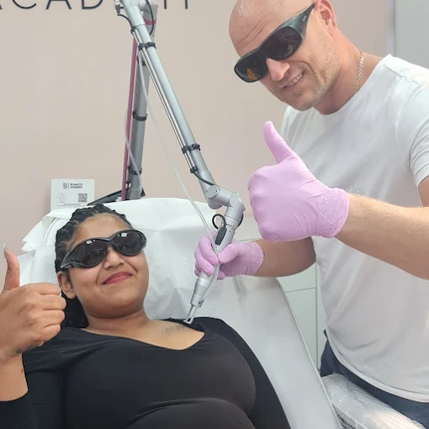
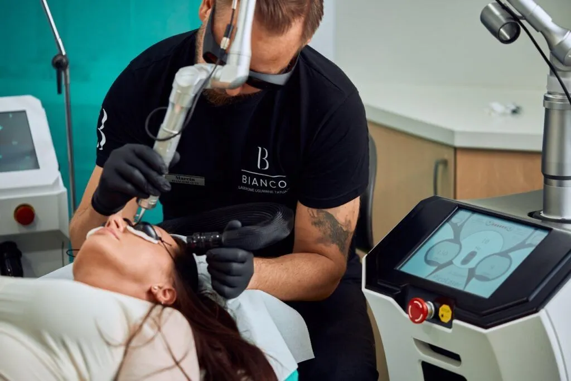
At Bianco Beauty, we run laser tattoo removal clinics across London, Milton Keynes, Soho, Manchester, Birmingham, and Poland, and structure our franchise offering around a 70/30 revenue split in the franchisee’s favour. Bianco supplies the technology, equipment, training, and centralised marketing, while the franchise partner brings the premises, staffing, and local regulatory compliance.
The general process for onboarding into a franchise like this tends to follow a similar pattern:
- Submit an initial franchise enquiry through the brand’s website.
- Have a consultation call with the franchise team to talk through territory and fit.
- Go through due diligence on your specific location and any local cost implications.
- Review and sign the franchise agreement, ideally with your own solicitor present.*
- Complete onboarding, staff training, and launch.
*We advise that you have independent legal advice on the agreement before you sign anything, regardless of how confident the franchisor sounds on the call.
Independent clinic vs franchise, side by side
| Factor | Independent clinic | Franchise route |
| Upfront training | You source and vet it yourself | Usually built into the package |
| Equipment | You choose and negotiate alone | Often pre-selected, sometimes at discounted bulk pricing |
| Brand recognition | Built from zero | There for you from day one |
| Revenue split | 100% yours with 100% risk yours too | Typically shared, e.g. 70/30 |
| Marketing | Your budget, your learning curve | Centralised campaigns, local tailoring marketing |
| Regulatory compliance | Entirely on you | Still on you, but with guidance |
Neither option is objectively better. It comes down to how much you value speed and support against how much you want to keep of the upside.
The risks nobody puts in the brochure
A picosecond laser machine alone can cost £30,000 to £60,000, compared with £10,000 to £30,000 for a Q-switched system. That’s before premises, staffing, or working capital while you build a client list.
Regulatory risk is the other one people gloss over. Laser Protection Adviser inspections, Core of Knowledge safety training, and council-specific licensing conditions can all delay your opening date by weeks if you haven’t budgeted the time.
Standards in this field are shaped in large part by bodies like the British Medical Laser Association, the UK’s longstanding society for laser and light-based device safety, so any franchisor or supplier worth working with, should be able to point to protocols that hold up against that kind of scrutiny.
Conclusion
Tattoo removal business opportunities aren’t a get-rich-quick play, but the underlying numbers are genuinely strong, and demand for laser aesthetic treatments keeps climbing across the UK. Whether you go independent or opt for a laser clinic franchise model, the fundamentals are the same: proper qualifications, proper licensing, and a laser suited to your target clients.
If you’re weighing up laser tattoo removal opportunities specifically, or want to see how an established operator structures its franchise model, it’s worth requesting the prospectus from Bianco Beauty.
Our team has spent over a decade building clinics across multiple UK cities and Poland, and that operational track record is exactly the kind of thing worth digging into before you commit any capital.
Get in touch for complete details!
FAQs
How much does it cost to invest in a tattoo removal business?
Costs vary widely, but expect anywhere from £10,000 for a basic Q-switched setup to £60,000 or more for premium picosecond equipment, plus premises, licensing, and staffing on top.
Is a tattoo removal franchise more profitable than going independent?
Not automatically, since franchises share revenue in exchange for support and brand recognition. It depends on how much the training, marketing, and equipment sourcing would have cost you to build alone.
Do I need a laser or beauty background to invest in this sector?
No, not to invest as an owner, though whoever performs treatments on-site needs VTCT Level 4 and Level 5 qualifications regardless of who owns the business.
What licences does a tattoo removal clinic need in the UK?
A Special Treatment Licence from the local council is the main one, alongside public liability and treatment risk insurance, and proof of relevant laser qualifications for every practitioner.
How long does it take to open a laser tattoo removal clinic from scratch?
Most independent openings take four to eight months once training, licensing, and premises fit-out are accounted for, franchise routes can move faster because much of that groundwork is already mapped out.
Is the tattoo removal market actually growing, or is this a fad?
The data says growing, not fading. The UK market alone is forecast to grow at over 20% a year through to 2033, driven by rising tattoo regret and wider social acceptance of removal as a normal choice.
About the reviewer
This article was reviewed by Bartlomiej Wozniak, Director and Senior Laser Tattoo Removal Practitioner at Bianco Beauty, who has spent over 12 years building and operating clinics across Milton Keynes, Soho, and Poland, and holds VTCT (iTEC) Level 5 Certification in Laser Tattoo Removal along with Level 4 Core of Knowledge for Laser and Light Devices. He also serves as a Director and Senior Trainer at Bianco Academy, where he oversees training for new practitioners entering the industry.